Woodrow's of Edinburgh
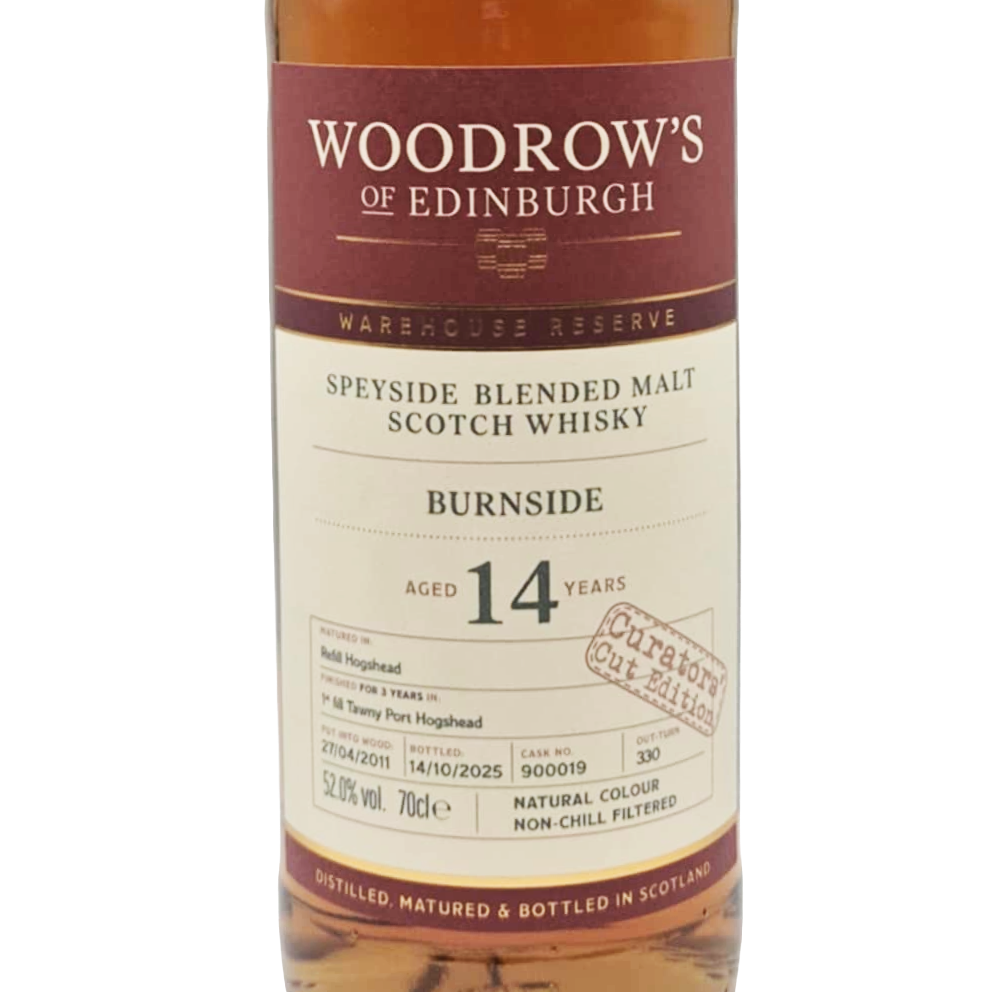
Woodrow's of Edinburgh - 14 yo Burnside 1st Fill Tawny Port Hogshead (teaspooned Balvenie)
Woodrow's of Edinburgh - 14 yo Burnside 1st Fill Tawny Port Hogshead (teaspooned Balvenie)
Woodrow’s of Edinburgh – Burnside 14 Year Old – Tawny Port Cask
1st Fill Tawny Port Hogshead | Single Cask | Cask Strength
A beautiful tawny port finished 'Burnside' bottled by Woodrow’s of Edinburgh at its natural cask strength of 52.0% ABV. Burnside is a trade name familiar to whisky enthusiasts and widely associated with teaspooned single malt from the Speyside distillery neighboring Glenfiddich. The tawny port cask adds layers of confectionary sweetness, orchard fruit, and gentle nuttiness.
Whisky Details
| Distillery | 'Burnside' |
| Region | Speyside |
| Bottler | Woodrow’s of Edinburgh |
| Age | 14 Years Old |
| Cask Type | 3-Year 1st Fill Tawny Port Hogshead Finish |
| Cask Number | #900019 |
| ABV | 52.0% (Cask Strength) |
| Bottle Size | 700ml |
| Outturn | 330 Bottles |
Tasting Notes
Nose
Sweet and elegant with notes of caramel, white chocolate, and fresh strawberries.
Palate
Light yet velvety, revealing layers of toffee, baked apples, and strawberry tart, followed by crème brûlée, toasted almonds, subtle marzipan, and gentle citrus zest.
Finish
Medium in length with soft white pepper spice, lingering red fruits, and a delicate creaminess.
Additional Information
✓ Natural Color
✓ Non-Chill Filtered
✓ Single Cask Bottling
✓ Bottled at Natural Cask Strength
Why We Like It
Where the Ruby Port release leans into darker berry richness, the Tawny Port cask offers a brighter, creamier profile. Think strawberries and cream, orchard fruit, toasted nuts, and soft dessert-like sweetness layered over elegant Speyside character.
About The Balvenie Distillery
Balvenie - Dufftown’s Other Giant
Few distilleries in Speyside operate with the level of vertical integration still practiced at The Balvenie Distillery. Established in 1892 by William Grant in Dufftown, Balvenie was built just a few years after its sister site, Glenfiddich Distillery, not simply to increase output, but to expand stylistic range within the same house. The two distilleries share a water source and infrastructure, yet diverge meaningfully in character: Glenfiddich typically presents a lighter, more estery profile, while Balvenie delivers a weightier, more honeyed spirit with added texture and depth.
Balvenie remains one of the rare distilleries to maintain a truly end-to-end production model, growing its own barley, operating a traditional malting floor, and employing an in-house cooperage. These legacy practices, combined with long fermentations and relatively low cut points, help define a spirit marked by soft orchard fruit, a waxy mouthfeel, and a malty sweetness capable of standing up to both ex-bourbon and more active oak. Under the decades-long stewardship of malt master David C. Stewart, the distillery has also played a pivotal role in shaping modern cask finishing, though at its best, the distillate itself remains the main event.
Official bottlings tend to emphasize precision, balance, and house consistency, but independent Balvenie is almost never encountered due to the distillery’s tight control over cask stock. As a result, teaspooned parcels, typically released under trade names, represent one of the only pathways for this spirit to surface outside official channels. For those in the know, they offer a more transparent and occasionally more muscular expression of the make: less polished, more distillate-driven, and anchored by Balvenie’s signature honeyed, malty core, with cask influence playing a supporting rather than leading role.
Share